Insights & Innovations at BluAI

Welcome to the BluAI Blog — your gateway to the latest in AI, technology, and innovation. Here, we share deep dives into our research, product updates, thought leadership, and behind-the-scenes looks at how we’re building the future of intelligent solutions. Whether you're a tech enthusiast, developer, or industry leader, our content is designed to inform, inspire, and ignite ideas.


Join us as we explore what’s next in the world of AI and beyond.

The Future of Healthcare: How Facial Expression Analysis is Revolutionizing Medical Monitoring

Introduction: Beyond Traditional Vital Signs

Healthcare technology has evolved dramatically over the past decade, moving from basic monitoring systems to sophisticated, AI-driven solutions that can detect the subtlest changes in human physiology. While traditional vital signs like heart rate, blood pressure, and temperature remain cornerstone metrics, a new frontier has emerged that promises to revolutionize how we understand and monitor human health: facial expression analysis.

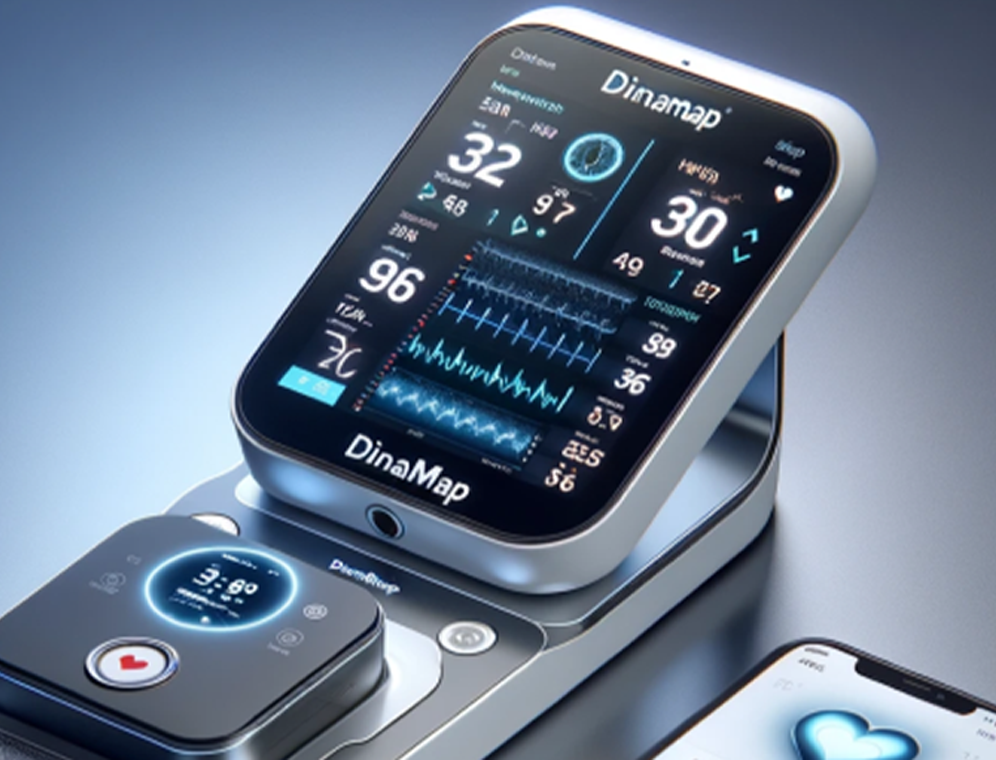
The vitalChair™ represents this next generation of medical monitoring technology, capable of measuring over 50 body vitals through advanced sensor integration and artificial intelligence. Among its most innovative features is its ability to analyze facial expressions—a capability that opens doors to unprecedented insights into patient health, comfort, and early disease detection.

But why facial expressions? The human face contains 43 muscles that work in complex combinations to create thousands of micro-expressions, many of which occur involuntarily in response to pain, discomfort, neurological changes, or emotional states. These expressions often precede verbal communication and can provide healthcare providers with critical information about a patient's condition before symptoms become apparent through traditional assessment methods.

The Science Behind Facial Expression Analysis in Healthcare

Understanding the Facial Coding System

Facial expression analysis in medical applications builds upon decades of psychological and neurological research. The foundation lies in the understanding that facial expressions are not merely emotional displays—they are physiological responses that can indicate pain levels, cognitive function, neurological health, and overall patient wellbeing.

Every facial movement is controlled by specific muscle groups that contract and relax in measurable patterns. When these patterns deviate from normal baselines, they can indicate various medical conditions or changes in a patient's status. This biological fact forms the cornerstone of medical-grade facial expression monitoring systems.

Technology Behind Innovation

Modern facial expression analysis systems employ sophisticated artificial intelligence algorithms that can detect and interpret the smallest facial movements with remarkable precision. The process involves several critical components:

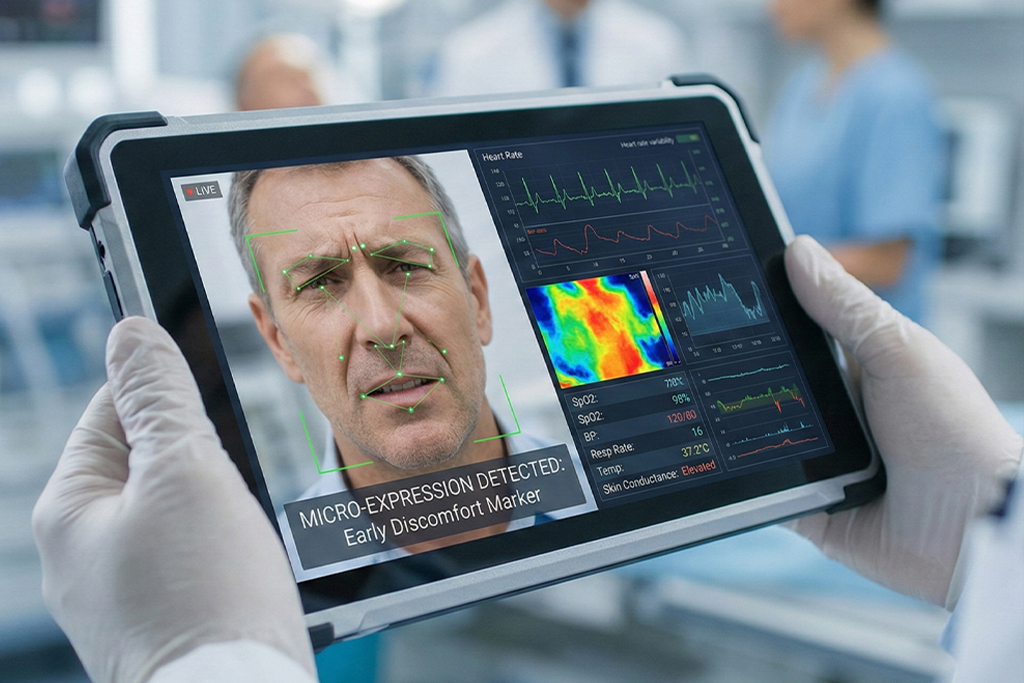
Facial Landmark Detection Advanced computer vision systems identify key anatomical points on the face, including the corners of the eyes, eyebrows, nose tip, mouth corners, and jawline. These landmarks serve as reference points for measuring facial movement and deformation. High-resolution cameras and specialized sensors can detect movements as small as 0.1 millimeters, allowing for incredibly precise monitoring of facial changes.

Feature Extraction and Analysis Once landmarks are established, the system analyzes how these points move and change over time. This includes measuring muscle contractions, skin deformation, changes in facial geometry, and temporal patterns of movement. Technology can distinguish between voluntary expressions (like smiling for a photo) and involuntary responses (like grimacing from pain).

Machine Learning Integration Sophisticated algorithms trained on extensive datasets learn to associate specific facial movement patterns with medical conditions, pain levels, and emotional states. These systems continuously improve their accuracy through exposure to diverse patient populations and validated medical outcomes.

Real-Time Data Processing Modern systems can process facial expression data in real-time, providing healthcare providers with immediate insights into patient status. This capability is particularly valuable in critical care settings where rapid changes in patient condition require immediate attention.

Medical Applications: Transforming Patient Care
Automated Pain Assessment

One of the most significant applications of facial expression analysis in healthcare is automated pain assessment. Traditional pain evaluation relies heavily on patient self-reporting using subjective scales, which can be unreliable due to factors like patient communication difficulties, cultural differences, or cognitive impairment.

Facial expression analysis provides an objective, quantitative approach to pain measurement. Research has identified specific facial action units that correlate strongly with pain intensity, including brow lowering, eye closing, nose wrinkling, and lip corner depression. By monitoring these indicators continuously, healthcare providers can:

  • Detect breakthrough pain in patients unable to communicate verbally
  • Monitor pain relief effectiveness in real-time during treatment
  • Identify pain patterns that may indicate complications or treatment needs
  • Provide more accurate pain management for pediatric, elderly, or cognitively impaired patients
Early Disease Detection and Monitoring

Facial expression analysis shows remarkable promise in detecting early signs of neurocognitive disorders and other medical conditions before conventional symptoms become apparent.

Neurocognitive Disorders Conditions like Alzheimer's disease, Parkinson's disease, and other forms of dementia often present with subtle facial expression changes months or years before cognitive symptoms become noticeable. These may include:

  • Reduced facial expressiveness (hypomimia) in Parkinson's disease
  • Changes in micro-expression timing and intensity in Alzheimer's
  • Alterations in emotional expression recognition and production
  • Asymmetrical facial movements that may indicate neurological changes

Genetic Conditions Certain genetic disorders present with characteristic facial features or expression patterns. Early detection through automated analysis can lead to faster diagnosis and intervention, particularly important in pediatric cases where early treatment can significantly impact long-term outcomes.

Mental Health Monitoring Depression, anxiety, and other mental health conditions often manifest through changes in facial expressions, including reduced positive expressions, increased negative affect displays, and changes in expression timing and intensity. Continuous monitoring can help healthcare providers adjust treatment plans and detect concerning changes early.

Patient Comfort and Treatment Monitoring

Beyond disease detection, facial expression analysis provides valuable insights into patient comfort and treatment effectiveness. This application is particularly valuable in:

  • Intensive Care Units: Monitoring sedated or intubated patients who cannot communicate verbally
  • Surgical Recovery: Assessing post-operative pain and comfort levels
  • Chronic Disease Management: Tracking daily comfort and quality of life metrics
  • Rehabilitation Services: Monitoring patient motivation and engagement during therapy sessions
Technical Implementation and Accuracy Considerations
Sensor Technology and Data Collection

Modern facial expression analysis systems integrate multiple sensor technologies to ensure accuracy and reliability:

High-Resolution Imaging Advanced camera systems capture detailed facial images at high frame rates, enabling detection of rapid micro-expressions and subtle changes in facial topology.

Infrared and Thermal Sensing These technologies can detect changes in blood flow and skin temperature that accompany facial expressions, providing additional data layers for more accurate analysis.

Multi-Spectral Analysis Some systems employ multiple light wavelengths to penetrate different skin layers, revealing physiological changes invisible to conventional cameras.

Algorithmic Approaches and Validation

The accuracy of facial expression analysis systems depends heavily on the quality of their underlying algorithms and training data:

Deep Learning Models Convolutional neural networks and other deep learning architectures have shown remarkable success in facial expression recognition, often achieving accuracy rates above 95% in controlled environments.

Cross-Cultural Validation Ensuring system accuracy across diverse populations requires extensive training on varied demographic groups, accounting for cultural differences in expression patterns and anatomical variations.

Clinical Validation Studies Medical applications require rigorous clinical testing to validate accuracy against established medical assessments and ensure reliability in real-world healthcare environments.

Challenges and Considerations for Clinical Adoption
Data Privacy and Security

The implementation of facial expression analysis in healthcare settings raises significant privacy concerns that must be addressed through comprehensive security measures:

Patient Consent and Data Ownership

Clear protocols must establish patient consent procedures and data ownership rights, ensuring patients understand how their facial expression data will be used, stored, and shared.

Encryption and Secure Storage Facial biometric data requires the highest levels of security, including end-to-end encryption, secure storage protocols, and limited access controls.

Regulatory Compliance Healthcare applications must comply with regulations like HIPAA, GDPR, and other relevant privacy laws, requiring careful attention to data handling and patient rights.

Accuracy and Clinical Reliability

While facial expression analysis shows great promise, several factors can affect accuracy in clinical settings:

Individual Variations Factors like age, ethnicity, medical conditions affecting facial muscles, and individual expression patterns can influence system performance. Ongoing calibration and personalization features help address these challenges.

False Positive and Negative Rates Understanding system limitations and establishing appropriate thresholds for clinical decision-making is crucial for safe implementation.

Clinical Evidence Requirements Regulatory agencies require substantial clinical evidence demonstrating safety and efficacy before approving medical applications of new technologies.

Standardization Efforts Industry organizations are working to establish standards for facial expression analysis in healthcare, ensuring consistency and interoperability across different systems and vendors.

The Future Landscape: Emerging Trends and Innovations
Integration with Electronic Health Records

The future of facial expression analysis lies in seamless integration with existing healthcare infrastructure:

Real-Time EHR Updates Automated systems that update patient records with facial expression-derived insights, providing healthcare teams with comprehensive, real-time patient status information.

Predictive Analytics Combining facial expression data with other health metrics to create predictive models for patient deterioration, treatment response, and health outcomes.

Informed Consent and Patient Autonomy

Healthcare providers implementing facial expression analysis must ensure patients fully understand the technology and its implications:

Transparent Communication Patients should receive clear explanations of how the technology works, what data is collected, and how it will be used in their care.

Conclusion: A New Era in Patient-Centered Healthcare

The integration of facial expression analysis into medical monitoring represents a significant leap forward in patient-centered healthcare. Technologies like those embedded in the vitalsChair™ demonstrate how sophisticated AI and sensor systems can provide healthcare providers with unprecedented insights into patient wellbeing, comfort, and health status.

As we look toward the future, the potential applications continue to expand. From early detection of neurocognitive disorders to real-time pain management optimization, facial expression analysis offers the promise of more responsive, personalized healthcare that can detect problems before they become critical and ensure patient comfort throughout the care journey.

However, realizing this potential requires careful attention to the challenges of privacy, accuracy, and ethical implementation. Success will depend on collaboration between technology developers, healthcare providers, regulatory agencies, and patients themselves to create systems that are not only technically sophisticated but also trustworthy, equitable, and truly beneficial to patient care.

The healthcare industry stands at the threshold of a new era where technology can read the subtle language of the human face to provide better, more compassionate care. As these systems continue to evolve and mature, they promise to transform not just how we monitor health, but how we understand and respond to human suffering and wellbeing in all its forms.

The future of healthcare is not just about collecting more data about understanding the human experience more deeply and responding with greater precision, empathy, and effectiveness. Facial expression analysis represents a crucial step toward that future, offering a window into the patient experience that has never been available to medical science.


Face Recognition Attendance in EAMMS: The Next Step in Smart Workforce Management

In a world where workplaces are evolving rapidly, organizations need attendance solutions that are fast, secure, and completely touchless. Traditional systems like punch cards, RFID badges, and fingerprint scanners often fail to deliver the accuracy and convenience that modern teams expect. EAMMS (Employee Attendance Management & Monitoring System) solves this challenge through an advanced Face Recognition Attendance feature designed to ensure seamless workforce monitoring.

At its core, Face Recognition Attendance offers a frictionless experience. Employees simply stand in front of their device camera, and within seconds the system identifies them and marks their Swipe In or Swipe Out. This eliminates the possibility of “buddy punching,” reduces manual errors, and delivers real-time attendance status with unmatched accuracy.

How Face Recognition Works in EAMMS : The face recognition flow in EAMMS is engineered to be simple for users yet powered by intelligent technology beneath the surface. When an employee opens the face attendance screen, the system activates the camera and begins scanning for a face. Once detected, advanced AI models analyze key facial features such as structure, patterns, and unique facial attributes to verify identity. This entire process happens instantly, enabling quick attendance marking without slowing the employee down. If the employee is swiping in for the day, the system records their entry time and displays a confirmation message. If they are swiping out—whether for a break or at the end of the day—the system captures the exit time and updates their status accordingly. EAMMS also supports multiple swipe cycles in a single day, making it suitable for workplaces where employees take short breaks or move between tasks.

Liveness Detection for Security : Face Recognition in EAMMS is not just convenient—it’s secure. To prevent misuse such as showing a photo or video, the system uses liveness detection. This checks subtle movements like blinking or natural facial gestures to ensure the person in front of the camera is physically present. This extra layer of security ensures attendance is always accurate and authentic.

A Touchless Experience for the Modern Workplace : One of the biggest advantages of face-based attendance is the completely contactless experience. Employees no longer need to touch scanners, press buttons, or carry access cards. This is especially useful in healthcare, manufacturing, or high-traffic workplaces where hygiene and speed matter. The entire attendance action typically takes just 2–3 seconds, ensuring smooth and uninterrupted workflow.

Designed for All Work Environments : Face Recognition in EAMMS works efficiently across different lighting conditions, camera types, and employee appearances. Whether an employee has a beard, wears glasses, or changes their hairstyle, the system adapts to these variations. This reliability makes it suitable for offices, remote teams, factories, and outdoor work locations. The system also intelligently switches between Swipe In and Swipe Out actions based on the employee’s last activity, ensuring they always know what to do next. This makes the experience simple and eliminates confusion, especially for first-time users.

Why Businesses Prefer EAMMS Face Recognition : Organizations choose EAMMS because it reduces administrative overhead, prevents attendance fraud, and improves accuracy. HR teams no longer need to verify manual records or fix missing entries. Everything is captured automatically and displayed in real time on the employee dashboard. From improved transparency to greater efficiency, Face Recognition Attendance helps companies build a modern, disciplined, and technology-driven work culture.

ADAS and LiDAR: Shaping the Future of Autonomous Driving

Advanced Driver Assistance Systems (ADAS) and Light Detection and Ranging (LiDAR) technologies are critical in making vehicles smarter, safer, and more autonomous.

ADAS Technologies:

Driver Monitoring Systems (DMS):Cameras and AI algorithms monitor driver behavior, detecting signs of drowsiness, distraction, or intoxication. This technology ensures safety by alerting the driver or even taking control in case of emergency.

Collision Avoidance and Lane-Keeping Assist:Using radar, ultrasonic sensors, and cameras, ADAS features like adaptive cruise control and automatic emergency braking significantly reduce the risk of accidents.

LiDAR in Self-Driving Cars: LiDAR sensors generate high-resolution 3D maps of the vehicle’s surroundings, enabling the detection of obstacles, road conditions, and traffic. Companies like Velodyne and Luminar are leading the market in LiDAR innovation, improving the accuracy of object recognition and vehicle navigation

The combination of ADAS and LiDAR is crucial for autonomous vehicles, pushing the boundaries of self-driving technology. With AI and deep learning algorithms, these systems are continuously improving their ability to predict and respond to complex driving environments.

Autonomous Vehicles: The Road to Full Automation

Autonomous vehicles (AVs) are rapidly becoming a reality, with companies like Tesla, Waymo, and GM Cruise leading the charge. The integration of AI, sensors, and data processing has paved the way for safer and more efficient transportation systems.

Levels of Automation:

Level 2 (Partial Automation):Tesla’s Autopilot and GM’s Super Cruise offer Level 2 automation, where the system controls acceleration, braking, and steering, but the driver must remain engaged.

Level 4 (High Automation):Companies like Waymo are testing Level 4 AVs that can operate without human intervention under certain conditions. These vehicles rely heavily on AI, LiDAR, radar, and high-definition maps to navigate.

Level 5 (Full Automation): AI-powered tools like IBM Watson Health and Google’s DeepMind are helping doctors analyze complex data to provide personalized treatment plans. Machine learning algorithms are improving the accuracy of disease prediction, especially in areas like cancer detection.Level 5 automation represents the ultimate goal—fully autonomous vehicles capable of driving in any condition without human intervention. While this level is still in development, advancements in AI, machine learning, and sensor fusion are bringing it closer to reality.

Challenges Ahead:

Regulation and Safety:Governments are still developing regulatory frameworks for AVs. Ensuring public safety and creating standardized testing protocols are key to wider adoption.

Infrastructure Requirements: AVs need smart infrastructure with 5G connectivity and vehicle-to-everything (V2X) communication to function optimally in real-world conditions.

As autonomous vehicle technology advances, it promises to revolutionize transportation, reducing traffic accidents, and emissions, and improving mobility for all.

Embedded Technology: The Backbone of the IoT Revolution

Embedded technology lies at the core of the Internet of Things (IoT), powering a wide array of devices, from smart home gadgets to industrial automation systems. These technologies are transforming industries by making devices more intelligent and connected.

Recent Trends in Embedded Technology:

Microcontrollers and Microprocessors:Devices like ESP32, ARM Cortex-M processors, and Raspberry Pi are leading the charge in embedded systems. These platforms are capable of real-time data processing, wireless communication, and edge computing.

Wireless Communication Protocols:Technologies like BLE, Zigbee, and LoRaWAN are enabling IoT devices to communicate seamlessly over long distances with minimal power consumption. In smart cities, these protocols are used for infrastructure monitoring and automation.

RTOS (Real-Time Operating Systems): As devices become more complex, RTOS solutions like FreeRTOS and Zephyr OS provide real-time task scheduling and execution, crucial for applications like automotive control systems and medical devices.

Low-Power Devices: Energy-efficient chips are essential in wearable technology and remote sensors. Companies like Texas Instruments and Nordic Semiconductor are developing ultra-low-power MCUs for battery-operated applications.

Security in Embedded Systems: With the rise of IoT, cybersecurity has become a critical focus. Solutions like ARM TrustZone and secure boot processes are being integrated to ensure the integrity of data and devices.

Embedded technology is set to expand further as AI moves to the edge, enabling smarter, faster, and more secure IoT applications.

Bluai Office Culture: A Vision of Innovation and Collaboration

At Bluai, our office culture is a reflection of our commitment to fostering innovation, collaboration, and continuous learning. We believe in creating an environment where creativity thrives and employees feel empowered to pursue their passions.

Core Values:

Collaboration: We encourage cross-functional teams to work together, leveraging diverse skill sets to solve complex problems. Whether it’s AI research or embedded technology development, collaboration is at the heart of our success.

Innovation-Driven:sters an innovation-first mindset. We allocate time for employees to experiment with new ideas and technologies, leading to breakthrough products and solutions.

Flexibility and Work-Life Balance: A work-life balance is crucial for productivity and employee satisfaction. Our flexible working hours, hybrid office model, and wellness programs ensure that our employees maintain a balanced lifestyle.

Continuous Learning: Bluai offers training programs, workshops, and access to industry-leading resources, enabling employees to upskill continuously. We encourage participation in global tech conferences and innovation challenges.

Sustainability and Community: We are committed to sustainable practices, from our eco-friendly office to our social responsibility initiatives. We actively participate in community outreach programs, leveraging technology for the betterment of society.

Our culture is defined by inclusivity, transparency, and a relentless pursuit of excellence. At Bluai, we’re not just building products; we’re shaping the future of technology.

Data and Machine Learning: Driving Innovation Across Industries

Data and machine learning are at the heart of today’s digital transformation, reshaping industries such as healthcare, finance, retail, and automotive.

Data’s Role in Innovation:

Big Data Analytics:Companies leverage vast amounts of data to gain insights, improve decision-making, and optimize processes. For instance, in retail, data-driven strategies personalize shopping experiences, while in finance, algorithms detect fraud in real-time.

Machine Learning Algorithms:Deep learning, reinforcement learning, and natural language processing (NLP) have paved the way for intelligent systems. Machine learning models are trained on massive datasets to improve their accuracy over time. In healthcare, they predict patient outcomes and suggest tailored treatments, while in automotive, they’re used to improve autonomous driving capabilities.

AI and Predictive Analytics: Predictive models help businesses foresee market trends, customer behavior, and equipment failures. AI tools like Amazon Forecast and Microsoft Azure Machine Learning empower businesses to make data-driven decisions.

Natural Language Processing (NLP): NLP powers chatbots, virtual assistants, and language translation tools, enabling more natural human-computer interactions. GPT models, like ChatGPT, are used to enhance customer service and streamline business operations.

The rise of cloud computing and edge AI is enabling more scalable and real-time data processing, which will only accelerate the role of machine learning in shaping the future.

The Future of Medical Technology: Innovations Transforming Healthcare

Medical technology is evolving at a rapid pace, revolutionizing how healthcare is delivered. From AI-driven diagnostics to wearable devices and robotic surgeries, these advancements are pushing the boundaries of modern medicine.

Key Innovations:

Wearable Devices:Smartwatches and other wearables can monitor heart rate, SpO2, and glucose levels, empowering patients to manage chronic diseases. Devices like the Apple Watch and Fitbit use photoplethysmography (PPG) and electrocardiograms (ECG) to track vital signs.

Telemedicine: The pandemic accelerated the adoption of telehealth, enabling remote consultations and reducing hospital visits. Telemedicine platforms are now incorporating AI to diagnose conditions based on symptoms.

AI and Machine Learning: AI-powered tools like IBM Watson Health and Google’s DeepMind are helping doctors analyze complex data to provide personalized treatment plans. Machine learning algorithms are improving the accuracy of disease prediction, especially in areas like cancer detection.

Robotics:Robotic surgeries, led by systems like the Da Vinci Surgical System, offer precision in minimally invasive procedures. These robots assist surgeons, allowing for reduced recovery times and smaller incisions.

3D Printing: Customized implants, prosthetics, and even bioprinting of organs are possible with 3D printing technology. This reduces the cost and waiting time for patients needing specialized medical devices.

The integration of AI and real-time data from devices is enhancing preventive healthcare, helping to identify diseases earlier and personalize treatments.

Revolutionizing Sports Performance with Smart Technology

In today’s high-performance sports landscape, outcomes are often determined by the smallest of margins—fractions of a second or subtle shifts in position. However, metrics like speed and distance, while essential, only scratch the surface. True performance enhancement comes from deeper insights—understanding every movement, every motion, and every metric that defines athletic potential.

To unlock these insights and create a competitive edge, modern performance tracking systems leverage advanced wireless connectivity and edge processing, enabling real-time decision-making and detailed performance analysis.

Capturing the Metrics That Matter Through the integration of numerous data points, it's now possible to build a comprehensive profile of an athlete’s performance. These data points vary by sport. In athletics or cycling, the focus might be on efficiency, stride analysis, or pedal dynamics. In team sports like football or basketball, attention shifts to metrics such as acceleration, sprint patterns, change of direction, and overall workload.

Instruments such as wearables, inertial sensors, and smart devices are now capable of analyzing critical actions—like the launch angle and spin rate of a ball, or the movement dynamics of a bat or racquet—offering unmatched insight into technique and impact.

Wireless Tech That Powers Real-Time Feedback Deep learning, reinforcement learning, At the heart of this transformation is Bluetooth Low Energy (BLE) and other low-latency wireless technologies. These systems collect, process, and transmit data instantly—turning raw figures into actionable intelligence for coaches and athletes alike.

Smart sensors built into wearables or embedded into sports equipment measure physical parameters in near real-time. Algorithms embedded within the devices analyze this raw data locally before transmitting it to mobile apps or cloud dashboards. This on-device processing (Edge AI) ensures reduced latency, faster decision-making, and efficient power usage.

Tracking the Game: Players and Equipment Predictive models help businesses foresee Ball tracking systems now offer insights into spin, speed, bounce, and trajectory—helping evaluate precision, shot accuracy, and strategy. Meanwhile, athlete tracking solutions analyze position, movement, load, and fatigue across the duration of a game or session.

Wearables worn on the wrist, chest, or even inside custom garments now provide physiological and biomechanical data—like VO2 max, heart rate variability, lactic acid levels, muscle fatigue, and power output. This allows coaches and trainers to monitor readiness, recovery, and risk of injury with scientific precision.

A New Era of Sports Tech Integration An example of this innovation in action is smart vests integrated with wireless sports sensors, used across professional sports leagues globally. These wearables continuously capture critical player metrics and transmit them to real-time dashboards, helping coaches make data-driven decisions during live play or practice.

These systems often combine multiple sensors—such as accelerometers, gyroscopes, magnetometers, and GNSS (Global Navigation Satellite Systems)—to measure speed, distance, impact, step balance, and dynamic stress. This data empowers teams with a full picture of athletic performance under real conditions.

From Data to Insights: The Power of Edge AI What truly transforms this technology is the application of Artificial Intelligence (AI) at the edge. By running advanced ML algorithms directly on the wearable device, we eliminate the need for heavy cloud computation and allow insights to be generated locally—faster, and with minimal power consumption.

This enables devices to recognize patterns, predict injuries, track performance trends, and optimize training programs. For instance, real-time AI analysis can reveal changes in gait that indicate fatigue, or subtle movement deviations that could precede injury.

Hardware That Meets High-Performance Demands The backbone of these analytics systems lies in powerful, energy-efficient wireless chips (SoCs) designed to perform complex computations while maintaining low power draw. These next-generation chipsets combine wireless connectivity, onboard AI processing, and sensor integration—all in a compact, efficient footprint.

Devices built with such hardware can function longer on smaller batteries while delivering richer insights. The result? More compact wearables, more accurate tracking, and a truly data-driven approach to performance optimization.

Shaping the Future of Sports Performance As technology continues to evolve, the sports industry stands to benefit immensely from real-time analytics, predictive modeling, and AI-powered coaching tools. Whether it’s fine-tuning an athlete’s biomechanics, tailoring recovery plans, or making strategic in-game decisions—smart sports technology is transforming how athletes train, perform, and succeed.

This convergence of wireless innovation, AI, and embedded sensing is not just changing the game—it’s redefining the very limits of human performance.

Post Comment

Your email address will not be published. Required fields are marked *